Evaluating the Pink Blue Peony Daisy Floral Pattern for Modern Digital Crafting and Event Design
In the evolving landscape of digital design and DIY crafting, selecting the right visual asset is often the difference between a professional-looking final product and one that feels amateurish. The Pink Blue Peony Daisy Floral Pattern has emerged as a significant contender in the realm of seamless background textures, particularly for those planning events or creating custom merchandise in 2026. This specific aesthetic combines the romantic, lush fullness of peonies with the cheerful simplicity of daisies, rendered in a soft pastel palette of pink and blue. While it may appear to be just another floral option at first glance, a closer evaluation reveals distinct characteristics that make it suitable for specific applications ranging from sublimation tumblers to high-end wedding stationery.
Defining the Aesthetic and Technical Specifications
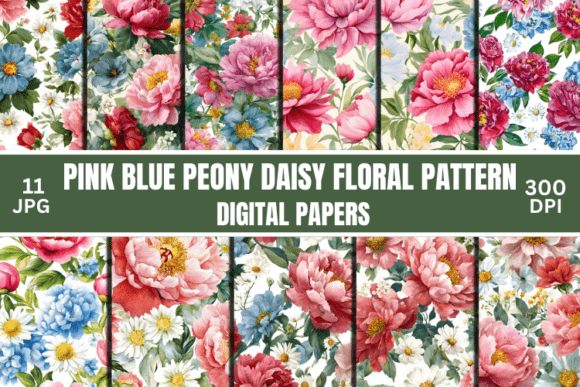
Understanding what sets this pattern apart begins with its composition. Unlike bold, high-contrast botanical prints that dominate certain fashion trends, the Pink Blue Peony Daisy Floral Pattern relies on a watercolor technique that mimics traditional hand-painting. The interplay between the deep pinks and calming blues creates a gender-neutral yet distinctly celebratory vibe, making it versatile for occasions like Mother's Day, summer graduations, or teacher appreciation gifts. The "seamless" nature of the design is critical; it allows the image to tile infinitely without visible breaks, which is essential for wrapping large surfaces like fabric rolls or tumbler wraps.
From a technical standpoint, the utility of any digital paper is dictated by its resolution and file format. High-quality iterations of this pattern typically come in a bundle containing around 11 unique variations within a single zip file. The standard for professional use in 2026 remains steadfast at 300 DPI (dots per inch) with dimensions of 3600 x 3600 pixels (equivalent to 12x12 inches). This resolution is non-negotiable for physical printing. If a designer attempts to stretch a lower-resolution image (such as 72 DPI web graphics) onto a 20-ounce tumbler or a large backdrop, the result will be pixelation and blurriness. The JPG format offered in these bundles ensures compatibility with almost all design software, from industry-standard Adobe suites to free online editors, facilitating a smooth workflow for both hobbyists and professionals.
Comparative Analysis: Watercolor Florals vs. Other Styles
When evaluating resources for a project, it is helpful to compare the Pink Blue Peony Daisy Floral Pattern against other popular categories to determine the best fit.
- Watercolor vs. Vector Illustrations: Vector graphics are excellent for scalability and crisp lines, often used in logo design. However, they can sometimes lack the organic texture and depth that watercolor provides. For projects requiring a soft, emotional touch—such as a birthday party invitation or a sentimental gift wrap—the fluid edges and color blending of the watercolor peony and daisy mix offer a warmth that vectors struggle to replicate.
- Pastel Palettes vs. Bold Botanicals: Trend cycles in 2026 continue to oscillate between maximalist dark florals and airy pastels. While bold, dark backgrounds make a strong statement for evening events or luxury packaging, they can overwhelm smaller items like stickers or planner inserts. The pastel pink and blue scheme offers a lighter alternative that maintains visibility without dominating the entire design space, making it ideal for "all-day" events like baby showers or graduation parties where a light, airy atmosphere is preferred.
- Seamless Patterns vs. Isolated Clips: Isolated clipart requires manual arrangement by the user to create a background, which can be time-consuming and often results in uneven spacing. A pre-made seamless pattern solves this by providing an instant, repeatable texture. This is particularly advantageous for sublimation printing on curved surfaces like mugs and tumblers, where aligning individual flowers perfectly is technically challenging.
Practical Applications and Best-Fit Scenarios
The versatility of this digital paper bundle extends across various mediums, but its effectiveness depends on matching the medium to the material constraints.
Sublimation and Hard Goods
One of the primary use cases for the Pink Blue Peony Daisy Floral Pattern is sublimation printing on hard goods. This includes customizing 11oz, 15oz, and 20oz mugs, as well as stainless steel tumblers. The high detail (300 DPI) ensures that the delicate petals of the peonies and the centers of the daisies remain sharp even when wrapped around a cylinder. For teachers or mothers receiving these gifts, the personalized nature of a custom wrap adds significant perceived value. However, users must remember that sublimation requires mirror-imaging the design before printing, a step that is easily managed with high-resolution JPGs but can degrade quality if the source file is poor.
Paper Crafts and Event Stationery
For paper-based projects, such as wedding invitations, anniversary cards, or scrapbook decorations, the color accuracy is paramount. The pastel tones are designed to print beautifully on cardstock and textured paper. When used as a background for text-heavy invitations, the lighter areas of the watercolor wash provide sufficient contrast for legible typography, whereas darker floral patterns might require additional overlay boxes. This pattern is also highly effective for creating cohesive party bundles, where the same design is applied to cupcake wrappers, banners, and favor tags to create a unified brand identity for the event.
Textile and Home Decor
Beyond paper and hard goods, these digital papers serve as excellent templates for fabric textures and iron-on transfers. Crafters often use them to create custom tote bags, aprons for teachers, or even upholstery accents. The repeatable nature of the set allows for the creation of continuous fabric prints via print-on-demand services. In this context, the 12x12 inch tile size is crucial; it is large enough to minimize repetition artifacts when scaled up for yardage, ensuring the floral arrangement looks natural rather than grid-like.
Limitations and Decision Factors
While the Pink Blue Peony Daisy Floral Pattern offers substantial benefits, it is not a universal solution for every design challenge. Potential buyers and users should weigh several factors before committing to this style for a major project.
Color Variance and Monitor Calibration: As with all digital products, there is an inherent limitation regarding color fidelity. The vibrant pinks and blues seen on a calibrated professional monitor may shift when printed on a home inkjet printer or a commercial sublimation press. Users must anticipate slight variations due to monitor settings, printer ink profiles, and the base color of the substrate (e.g., a white tumbler vs. a cream-colored cardstock). Those requiring exact Pantone matches for corporate branding may find watercolor styles too variable.
Readability Concerns: The detailed nature of peony and daisy clusters can sometimes interfere with text placement. If the pattern density is too high in certain areas of the 11-paper set, adding overlaid text without a backing shape can reduce readability. In such cases, designers may need to choose a variation from the bundle with more "negative space" or utilize opacity adjustments, which requires a bit more editing skill than using a solid color background.
Trend Longevity: While floral patterns are perennial, specific color combinations do cycle in popularity. The pink and blue pastel combination is currently aligned with 2026 trends for spring and summer events. However, for projects intended to have a timeless, decades-long appeal (such as heirloom quilts or classic wedding albums), users might consider whether this specific trendy palette aligns with their long-term vision or if a more neutral botanical approach would be safer.
Making an Informed Choice
Ultimately, the decision to utilize the Pink Blue Peony Daisy Floral Pattern should hinge on the desired emotional tone of the project and the technical requirements of the output method. If the goal is to create something that feels handmade, soft, and celebratory for occasions like birthdays, Mother's Day, or graduations, this style excels. The inclusion of multiple variations in a single bundle provides the flexibility needed to mix and match for a comprehensive party suite or product line.
However, if the project demands stark minimalism, ultra-modern geometric precision, or strict corporate color adherence, alternative resources such as vector line art or solid color gradients may be more appropriate. By understanding the trade-offs between the organic beauty of watercolor florals and the precision of other formats, creators can select the resource that truly elevates their work. Whether wrapping a gift, designing a tumbler for a small business, or setting the stage for a wedding, the right pattern acts as the foundation upon which memorable experiences are built.